
Informed Decision Making
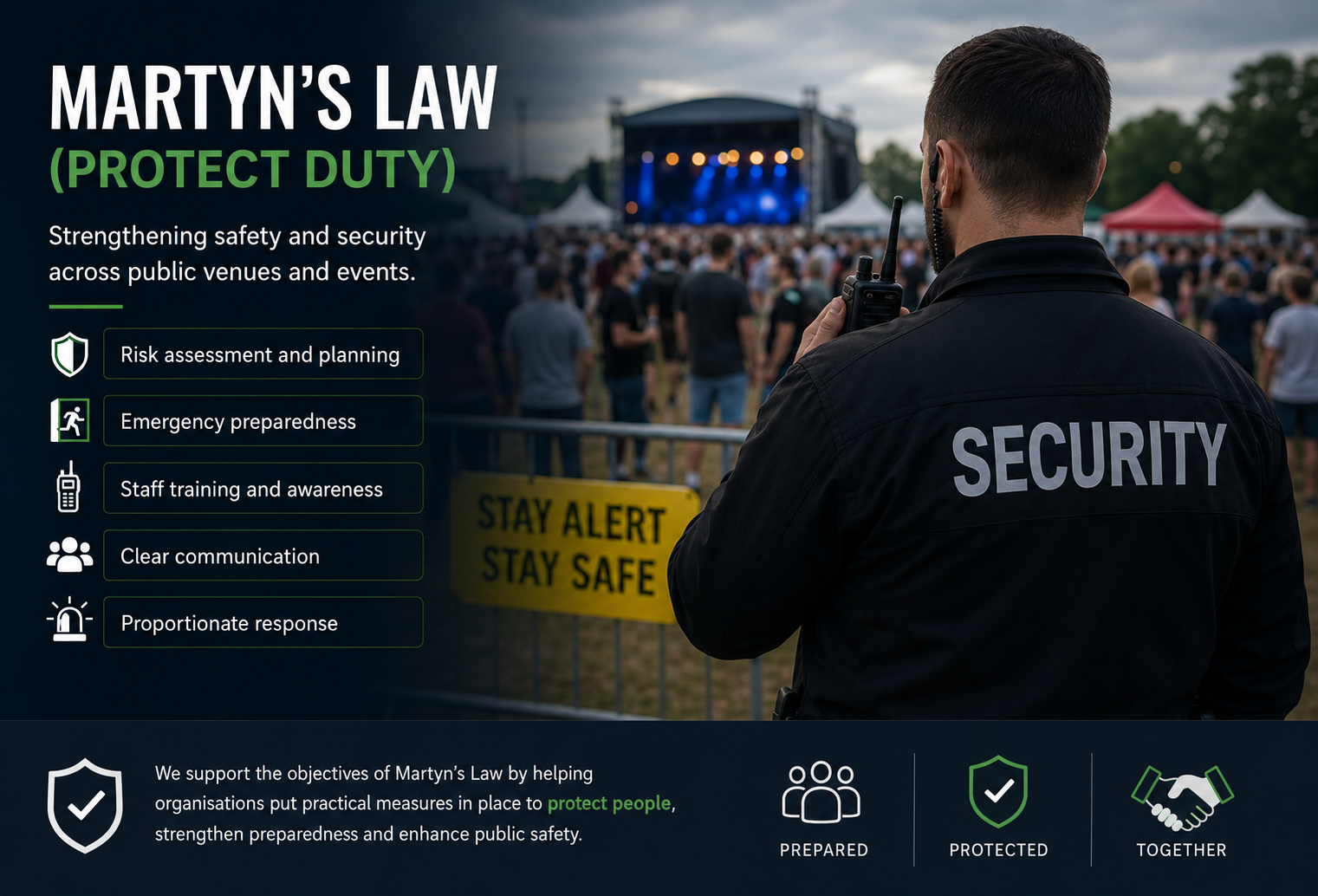
Martyn's Law
Enhancing Public Safety Through Preparedness
We support the principles of Martyn’s Law (Protect Duty) by embedding security awareness and proportionate protective measures into our planning and operational activities.
Martyn’s Law encourages organisations responsible for publicly accessible locations to consider the risks associated with terrorism and hostile incidents, and to implement practical measures that improve public safety.
Although requirements vary depending on the venue and event, we believe good preparation benefits everyone.
This influences our approach to:
- Event security planning
- Dynamic risk assessments
- Emergency procedures
- Staff awareness
- Incident response planning
- Multi-agency working
- Communication procedures
- Public reassurance
By considering potential risks before they arise, we help create safer environments for visitors, staff and organisers.
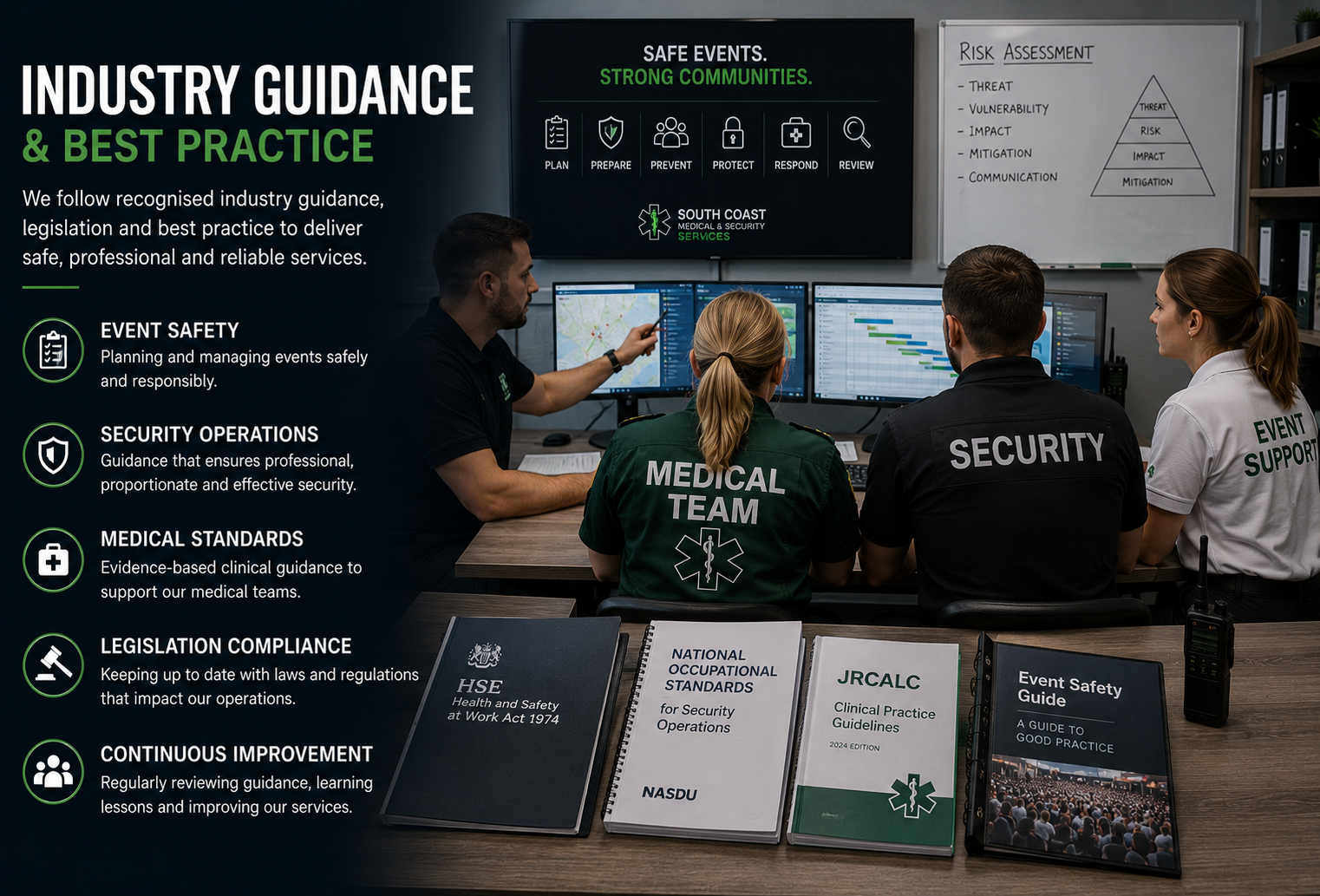
Industry Guidance
Operating to Recognised Standards
Professional services require more than experience—they require continual learning.
Our operational procedures are informed by recognised industry guidance, legislation and best practice published by professional bodies, regulators and public agencies.
Where relevant to the services we provide, we consider guidance relating to:
- Event safety management
- Crowd management
- Health and safety
- Security operations
- Safeguarding
- First aid provision
- Emergency planning
- Data protection
- Incident reporting
Using recognised guidance allows us to continually improve our procedures, maintain high standards and deliver services that clients can trust.
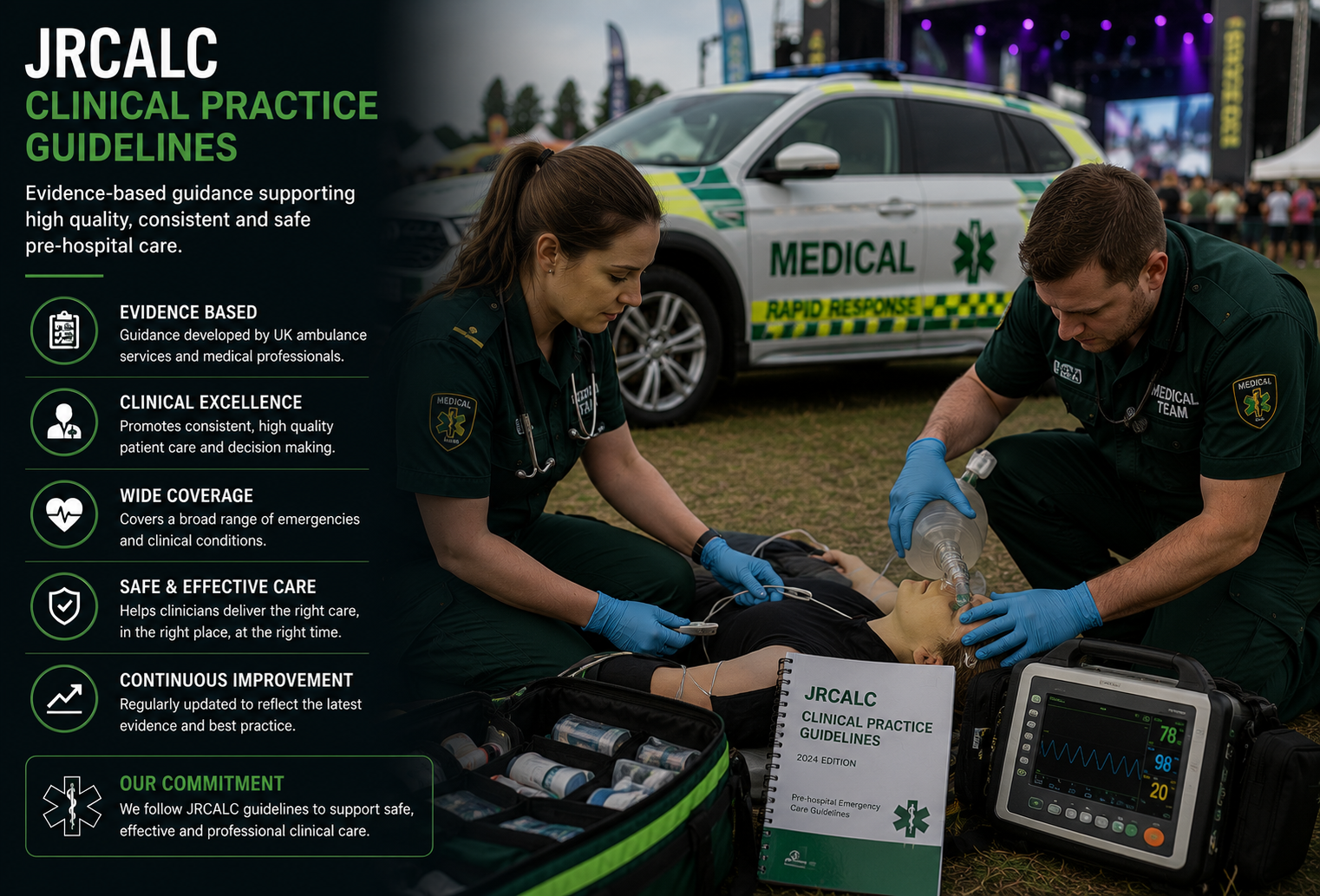
JR Calc Guidelines
Evidence-Based Pre-Hospital Medical Care
Our medical teams use the Joint Royal Colleges Ambulance Liaison Committee (JRCALC) Clinical Practice Guidelines to help inform the delivery of pre-hospital emergency care within the competencies, qualifications and scope of practice of each clinician.
JRCALC provides nationally recognised, evidence-based guidance used throughout UK ambulance services and independent healthcare providers. These guidelines support consistent decision-making, helping clinicians assess patients, recognise serious illness or injury and determine the most appropriate treatment and onward care.
Within our medical operations, JRCALC helps guide:
- Patient assessment
- Medical emergencies
- Trauma management
- Paediatric care
- Cardiac emergencies
- Respiratory emergencies
- Medical documentation
- Clinical decision-making
- Escalation and referral pathways
While clinical judgement always remains essential, following recognised guidance promotes consistency, supports patient safety and helps ensure our patients receive high-quality care.
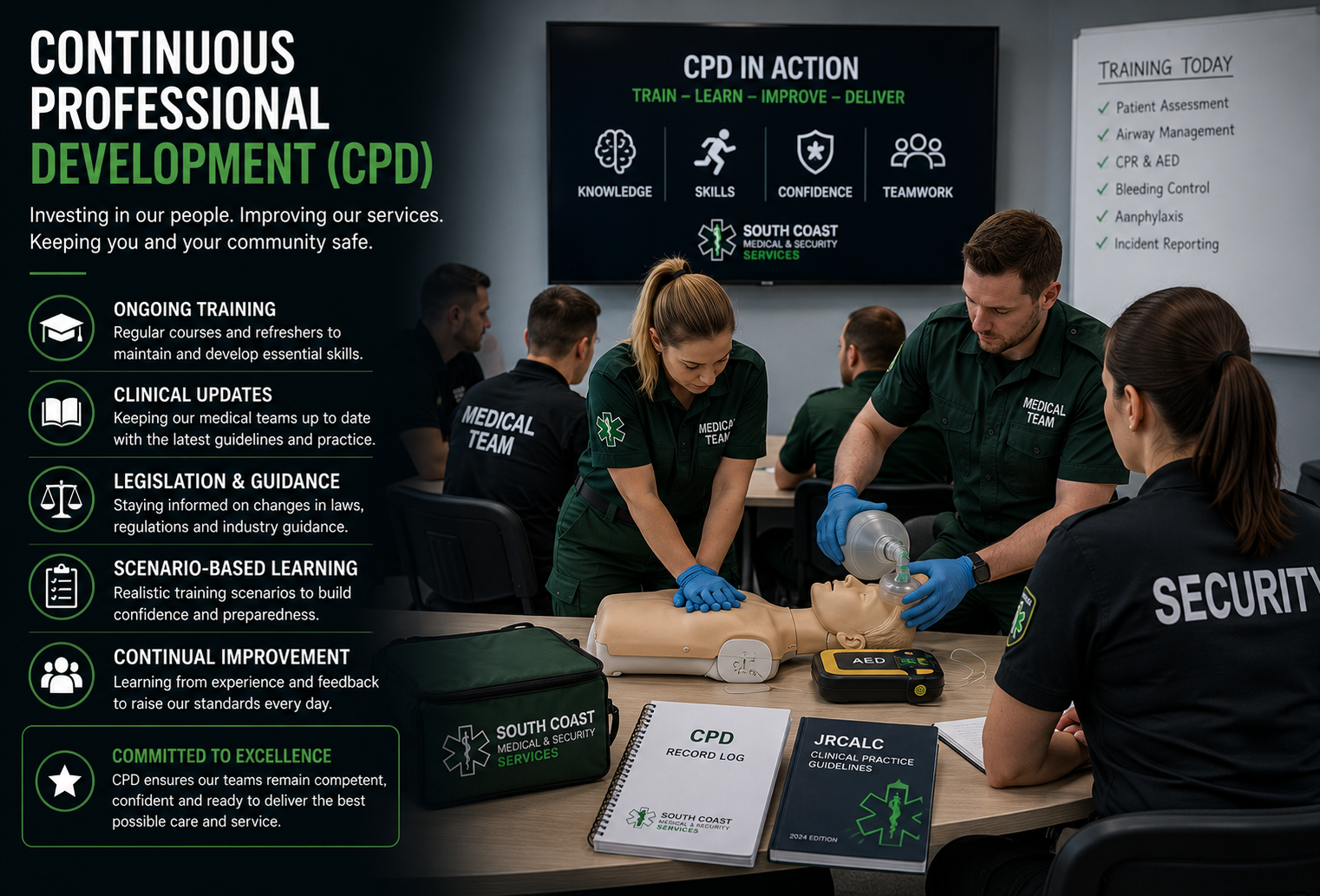
Continuous Professional Development (CPD)
Investing in Our People
Professional standards rely on knowledgeable, well-trained personnel.
We actively encourage continuous professional development across both our medical and security teams to ensure our knowledge remains current and our skills continue to develop.
Our commitment includes:
- Regular refresher training
- Scenario-based exercises
- Clinical updates
- Legislative updates
- Industry guidance reviews
- Lessons learned from previous deployments
- Internal quality assurance
- Continuing competency development
By investing in training and professional development, we strengthen the quality of service we provide and ensure our teams remain prepared for the challenges of modern medical and security operations.
And More,
The Purple Guide
Best Practice for Safe Events
The Purple Guide to Health, Safety and Welfare at Music and Other Events is widely recognised as the UK’s leading source of guidance for planning and managing safe events.
Where appropriate, we use the principles of the Purple Guide to help inform our operational planning, considering areas such as crowd management, medical provision, emergency procedures, stewarding, communications and welfare facilities. By incorporating recognised event industry guidance into our planning, we help clients deliver safe, well-managed and enjoyable events.
Health and Safety Executive (HSE) Guidance
Putting Safety First
The safety of our staff, clients and the public underpins every service we provide. Our planning and operational procedures are informed by guidance published by the Health and Safety Executive (HSE), helping us identify risks, implement appropriate control measures and promote safe working practices.
From event planning and workplace safety to manual handling, incident reporting and risk management, HSE guidance supports the way we prepare for, deliver and continually review our operations. By embedding recognised health and safety principles into everything we do, we help create safer environments for everyone involved.
Frontline Experienced Staff
Knowledge Built Through Real-World Operations
We believe the best decisions come from combining recognised guidance with practical frontline experience. Our management team and operational staff bring experience from a range of medical, security and event environments, allowing us to understand the challenges our clients face and respond effectively.
This operational knowledge helps shape our planning, risk assessments and service delivery, ensuring our procedures are practical, proportionate and suited to real-world situations. By employing personnel with genuine frontline experience and encouraging continuous professional development, we maintain high standards while delivering professional, informed and reliable services.